

Clip
Klip
A heart-breaking, though never hopeless, portrait of the mores of modern youth.
Even if a screening is sold out, tickets are often available 30 minutes before the start of the film at the box office at each venue.

- Director-Screenwriter Maja Miloš
- Producer Jelena Mitrović, Srdan Golubović
- With Isidora Simijonović, Vukašin Jasnić, Sanja Mikitišin
- Serbia 2012
- 102 mins
- UK distribution WIDE
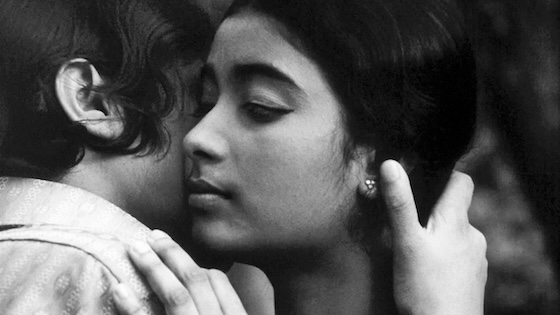
Jasna is a bored teenage girl growing up in the sticks of Belgrade, unhappy in her environment and keen to find escapes from her complicated family life. She relishes the freedoms of burgeoning adulthood while refusing to accept any of the responsibilities that come with it. So Jasna parties hard with her friends, dressing up in saucy parodies of high fashion, revelling in booze, drugs and sex while recording much of her illicit experimenting on her mobile phone. She falls for Djole, a schoolfriend who she has sex with, though both kids appear incapable of confronting the real emotions their relationship stirs. Clip is a coming-of-age story that resolutely avoids the clichés of the genre. Visceral, brutally honest and sexually explicit, Maja Miloš’ debut delivers a bold vitality that strikes a sympathetic, non-judgemental tone while presenting a heart-breaking, though never hopeless, portrait of the mores of modern youth.
Michael Hayden
Director statement
Through the prism of a seemingly simple, youthful love story, the film Clip addresses the paradoxical clashes of uncontrolled euphoria and aggression with states of apathy and hopelessness typical of the younger generation in Serbia at the beginning of the 21st century. All the characters in the film, and the central heroine in particular, are seeking ways of expressing their enormous energy, while at the same time meeting the irreconcilable needs of fitting in and distancing themselves from the environment they live in, and recognising and defining their own identities. Anger, destruction and self-destruction are vents through which this energy surfaces, but completely unexpectedly, to themselves as well, tenderness and empathy emerge. The characters are distanced from all social forms and the grey, monotonous, cruel everyday life, manifesting this through an apathy that often becomes an intentional attitude, a pose to assume in front of the grown-ups. On the other hand, they have the feeling that real existence has been moved to a parallel world which contains explosive forces they cannot control. The film poses the question of whether apathy is a product of repressing energy and shifting it to the parallel world, or whether it is a product of society in which a large number of people feels the loss of meaning and hope. The film is a blend of love scenes and cruel realities, the omnipresent trash the heroes are surrounded with, the lightness of youth and gravity of social and personal problems these young people grow up with; all the while harbouring the idea of escape, as they cannot and will not deal with them. They live in an enclosed circle they can’t step out of, and at the same time they are convinced real freedom lies within it.
Maja Miloš
Director biography
Born in Belgrade in 1983, she graduated from the Department of Film and Television Directing at the Faculty of Drama Arts there in 2008, having already directed educational programmes for national television and spent 2006 at the documentary film school at La Femis in Paris, where she also made a short documentary. Since 2005 she has also worked on feature films as a casting director and assistant director. Clip is her first feature.
Filmography (selected)
2003 Interval [s]
2004 Si tu timažin [s]
2006 Les Cousins [s]
2008 Prah (Dust)
2012 Klip (Clip)

Become a Member
Get early booking access and enjoy year-round benefits with BFI Membership.
Join today
Festival brochure
Download our digital BFI London Film Festival 2025 brochure, compatible with most screen readers.
Download brochure


