

Living
Zhit
Vasili Sigarev’s powerful and challenging film centres on three stories of life and death in the Russian province of Yekaterinburg.
Even if a screening is sold out, tickets are often available 30 minutes before the start of the film at the box office at each venue.

- Director-Screenwriter Vasili Sigarev
- Producer Roman Borisevich, Alexander Kushaev
- With Yana Troyanova, Olga Lapshina, Alexei Filimonov
- Russia 2011
- 117 mins
- Production company Koktebel Film Company
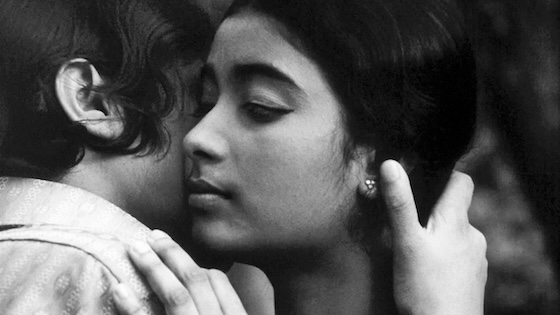
A man cycles on to a river bank and disappears. Two young people, Grishka and Anton, decide to get married but run foul of a brutal assault on a train. Galya, a middle-aged woman whose daughters are in temporary care, waits for their return. These three stories remain separate, but are interwoven in this impressive second feature by leading Russian dramatist Vasili Sigarev, whose controversial Wolfy was shown at the LFF in 2009. Set in a small town in the director’s home province of Yekaterinburg, it provides powerful portraits of characters and stories drawn from local life. Sigarev’s subject is that of death in life, how people react to unexpected tragedy, with the links between living and dead portrayed through engaging and realistically expressed fantasy. Powerfully acted with resonant visual imagery, Living confirms Sigarev as one of the most talented of the new Russian directors.
Peter Hames
Director statement
I got the first flashes of the story back when I was about twelve. One day, on the way to school, I passed a dark clump of people crowded outside a white marble-faced house. I headed towards them. They weren’t moving. I walked past them, went up to the second floor, and entered a flat with tablecloths and bedspreads hung over every mirror. And I became a different person. I won’t tell you what I saw there. I want you to see it for yourself in the movie. But I’ll tell you about the questions I was asking myself back on that day. Or maybe I was asking someone else... These questions were: What happens to the people left behind? How do they get through this? And most importantly, why? I’ve yet to find the answers to these questions. But I did find an answer to a different question: No matter how cynical and inhumane our life might get, no matter how it tries to make us hate it, there is only one thing we must continue to do: we must live. It’s not easy. Sometimes it seems inconceivable, even impossible. But it’s essential. Because life isn’t just a carbon-based form of existence. Life is ‘...my soul, like fire and like smoke...’.
Vasili Sigarev
Director biography
Born in 1977 in Russia’s Central Urals region, he studied education before taking drama courses from Nikolai Kolyada. He drew international attention in 2002 when his play Plasticine was staged at London’s Royal Court Theatre, winning for him the Charles Wintour Prize for Most Promising Playwright. Since 2003 he has written some 18 plays that have been staged both in Russia and abroad. He saw two of his works adapted for the 2005 feature film Prodayotsya detektor lzhi, then transformed his play Wolfy into his feature directorial debut. This took the top award at the 2009 Kinotavr festival of Russian films in Sochi, and played in that year's LFF.
Filmography (selected)
2009 Volchok (Wolfy)
2012 Zhit (Living)

Become a Member
Get early booking access and enjoy year-round benefits with BFI Membership.
Join today
Festival brochure
Download our digital BFI London Film Festival 2025 brochure, compatible with most screen readers.
Download brochure


