

Just the Wind
Csak a szél
A shattering dramatic response to events of racially motivated violence against Romanies in Hungary which left six dead and many more wounded.
Even if a screening is sold out, tickets are often available 30 minutes before the start of the film at the box office at each venue.

- Director-Screenwriter Bence Fliegauf
- Producer Ernö Mesterházy, András Muhi, Mónika Mécs
- With Katalin Toldi, Gyöngyi Lendvai, Lajos Sárkány
- Hungary-Germany-France 2012
- 87 mins
- Sales The Match Factory
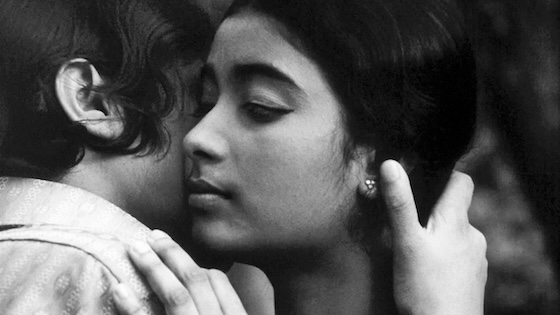
Bence Fliegauf’s (Dealer; Milky Way) raw, atmospheric Berlin Jury prize- winner is a shattering dramatic response to events of racially motivated violence against Romanies in Hungary which left six dead and many more wounded. Mari leaves her invalid father in their dilapidated rural dwelling to work two jobs, while her responsible and talented teenage daughter goes to school and her 11-year-old son plays truant, preparing for the return of their unknown enemies. Small incidents over the course of the day reveal more about the terrible crime committed against their neighbours, as well as the racism that constantly intrudes on their existence. The film’s deceptively simple observational style, underscored by extraordinary performances from its non-professional cast, belies its sophisticated storytelling structure. Zoltán Lovasi’s hand-held camerawork lends the film a documentary-like realism and simultaneously heightens the tension, its roving presence evoking the movements of both anonymous hunter and prey.
Clare Stewart
Director statement
Between 2008 and 2009 in Hungary, a group of offenders committed acts of violence against Romanies. Sixteen homes were attacked with Molotov cocktails and 63 shots were fired with shotguns and rifles. The crimes totalled a number of 55 victims. Five people were injured to various degrees. Six died in the attacks. The suspects are currently the subject of criminal proceedings. Though instigated by these criminal acts, this film is not a documentation of the publicly-released information on the actual events. Killers are simple, everyday people: they listen to commercial radio stations, go to malls, window-shop, have some mortgage payments and maybe even kids. Murder is generally just an episode in their lives which destroys them and those in their environment. They are losers. At least that’s the conclusion I came to after I conducted a few in-depth interviews with convicted murderers. For me, while filming Just the Wind, it was more important to stay with the potential victims. It is a great challenge to get the audience to feel even a little bit of what the victims experience while they are being hunted. The heroes of my film are simple Romanies: a middle-aged mother raising her kids, an eleven-year-old boy and a just-blooming teenage girl. The woman cares for her invalid father and in the meantime works as a cleaning lady, while the girl goes to school and the boy roams around the area near his home. Their paths diverge during the day and the question is: will they ever see each other again? I tried not to portray Romanies drumming on jugs, playing violins, or dancing. That’s so boring. From this perspective, with regards to Just the Wind, I was very curious to find out what happens when a Romani person is alone. This was a very exciting question, because the portrayed image of the Romanies as creatures of instinct, weeping whilst singing, goes hand in hand with the fact that they are almost exclusively shown in large, chaotic groups. Like all stereotypes, this too originates from reality, but is very distorted if this is all we see. What happens if a Romani goes off to collect wood alone? If he is at home by himself? If she works in solitude? What happens when a Romani doesn’t want to live up to the stereotype expected of them by those who visit one of their settlements? When I was writing the film, the motive was still a mystery; what made them do this? They shot so-called ‘hard-working’ Romanies, not ‘parasites’, and racist logic couldn’t make sense of it. After all, racists especially love to emphasise that it’s not all Romanies and Jews who cause problems, just those who steal, lie, kill, don’t work, etc. Only they have to be alienated, rounded up in ghettos, and exterminated, not the others. I think the double twist in this case is that it seems that the perpetrators murdered ‘honest Gypsies’ on purpose. They thought that the only reaction the others could have was bloody revenge, and then finally civil war would break out. Great plan. The law calls this a sinister motive, and I call it idiocy. Racism is nothing more than a fatal series of mistakes in reasoning: aka inanity.
Bence Fliegaufi
Director biography
Born in Budapest in 1974, he had a troubled youth but found work as an assistant director in television, and rapidly taught himself the rudiments of editing, art direction and screenwriting as he embarked ‘in a manic way’ on a film career. His short Talking Heads won the best Experimental Film prize at the 2001 Hungarian Film Week, and Hypnosis took Jury Prizes in both Germany and Budapest. In 2002 he established the craft-based Raptors’ Kollektíva, and each of his features since (including the English-language Womb, with Eva Green and Matt Smith) have played at the LFF – albeit all previously under his given-name credit of Benedek Fliegauf.
Filmography
2000 Határvonal (Borderline) [doc s]
2001 Beszélo fejek (Talking Heads) [s]; Hypnosis [s]; Van élet a halál elott? (Is There Life Before Death?) [doc]
2003 Rengeteg (Forest); A sor (The Line) [s]
2004 Dealer; Európábol Európába [doc; one segment only]
2005 Pörgés (Trance) [s]
2007 Tejút (Milky Way)
2008 Csillogás [doc]
2010 Womb
2012 Magyarország 2011 [one segment only]; Csak a szél (Just the Wind)

Become a Member
Get early booking access and enjoy year-round benefits with BFI Membership.
Join today
Festival brochure
Download our digital BFI London Film Festival 2025 brochure, compatible with most screen readers.
Download brochure


